designer1@mandmmultimedia.com

When Convenience is the Cure: Medical Retail

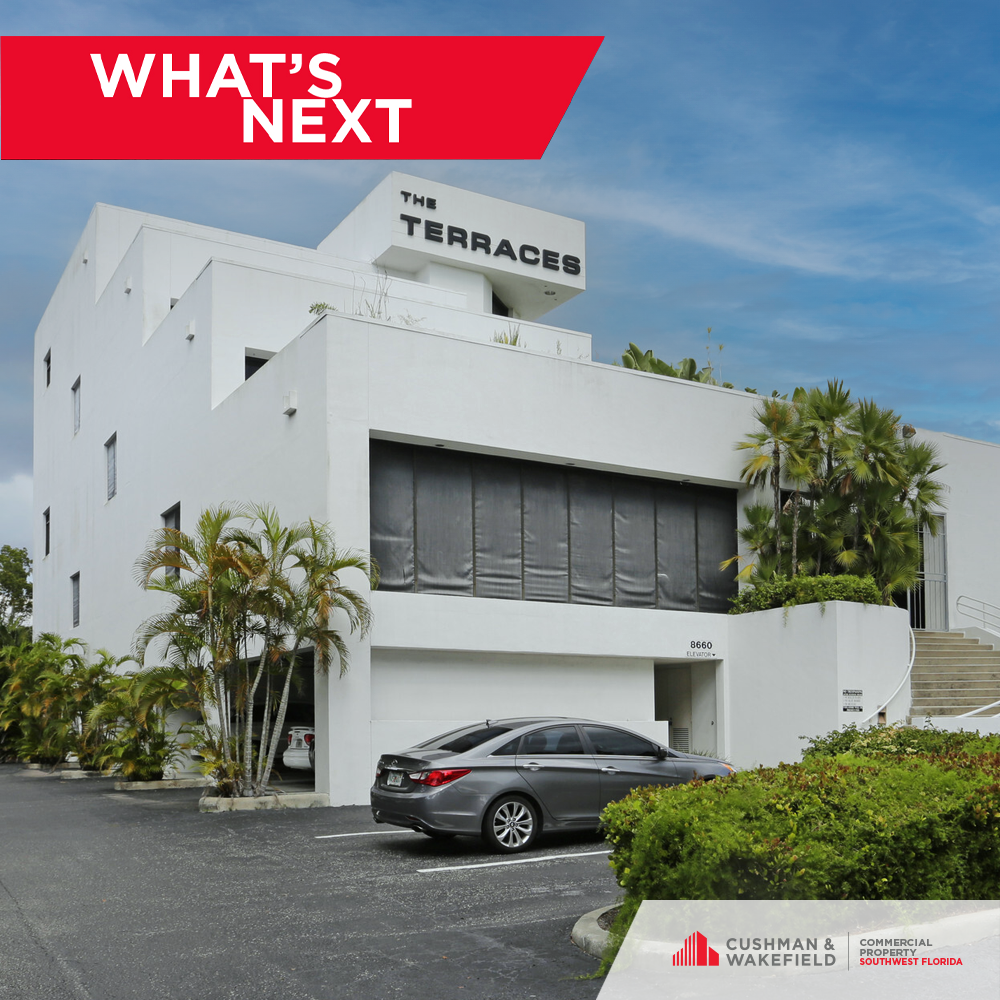
By Gary Tasman Nationwide, commercial property is experiencing a significant shift in the makeup of the brick- and-mortar retail market. The COVID-19 pandemic has repeatedly taught us that convenience is king, and although we have somewhat returned to our pre-pandemic routines, online ordering, delivery services, and omni-channel distribution are all continuing to thrive. While some traditional retail shops are downsizing their space or even shifting to digital storefronts to better serve their customers, an interesting class of new retail tenants, called “medtail,” is drawing new customers to shopping centers. While the increased foot traffic is a boon to commercial property owners seeking to fill retail space, this growing class of retail also brings unique challenges to lessors. The Rise of Medical Retail “Medtail,” short for “medical retail,” is a rapidly growing addition to the retail tenant mix. Dermatologists, physical therapists, medical spas, and even imaging services and urgent care centers are now occupying retail space once held by more traditional retailers. Growing consumer expectations for convenience are one source of medtail’s increasing popularity, alongside an aging population with more significant medical needs than previous generations. While much of the nation is just beginning to experience this trend, Southwest Florida has long been a medtail mecca. Thanks to a population 13 years older than the national average, our region is no stranger to these medical-retail hybrids. For landlords, medtail tenants bring foot traffic to shopping centers and variety to a tenant mix. However, healthcare-oriented tenants have specialized needs, and property owners must be prepared to meet the expectations of their medical lessees. Medtail Tenant Needs In many cases, improving a space for a medical retail tenant may be cost-prohibitive. Landlords must consider the following needs when considering leasing to a medtail tenant. Barrie Scardina, Cushman & Wakefield’s Retail Services Leader for the Americas, outlines several factors: Waste Disposal The disposal of medical waste requires special pickup services, and these waste products must be kept separate from general waste. Medtail leases must address responsibility for medical waste pickup as well as any insurance issues that may result from potential contamination issues. Structural and Weight Constraints Imaging and advanced diagnostic equipment may require different floor load factors to accommodate the weight of these items. Additionally, imaging equipment may require reinforced walls, and labs may require specialized ventilation. Electrical and Plumbing Needs Surgery centers and facilities that conduct similar procedures require a backup generator and may also utilize an additional electrical feed. Facilities used for heavy medical purposes need a sink in each examination room, and typically have separate staff and patient restrooms. Life Safety Systems It is not uncommon for medical facilities to require more robust fire and life safety systems than standard retailers. Co-tenancy Clauses Medtail brands want to ensure that they project a healthful image. They will typically avoid being located near tenants like tobacco shops or liquor stores, and may seek a co-tenancy clause to ensure their health-conscious image is protected. Because of the above factors, tenant improvements can be very pricey for medical retail uses. “Depending on the healthcare entity signing the lease, they could have very high tenant improvement allowance demands,” explains Scardina. “$50 to $75 per square foot is standard in a medical office building, but their total cost could run between $200 and $300 psf for standard healthcare uses.” While the medtail trend may not be new to Southwest Florida, we anticipate that this sector will continue to grow as our desire for convenience in all areas of our lives matures. Whether you are a healthcare provider seeking retail space or a property owner in search of a dependable tenant, the Commercial Property Experts at Cushman & Wakefield | Commercial Property Southwest Florida are prepared to assist you. Contact us by contact-us

When Convenience is the Cure: Medical Retail Read More »

Cushman & Wakefield | Commercial Property Southwest Florida honored as 2021 Community Steward of the Year

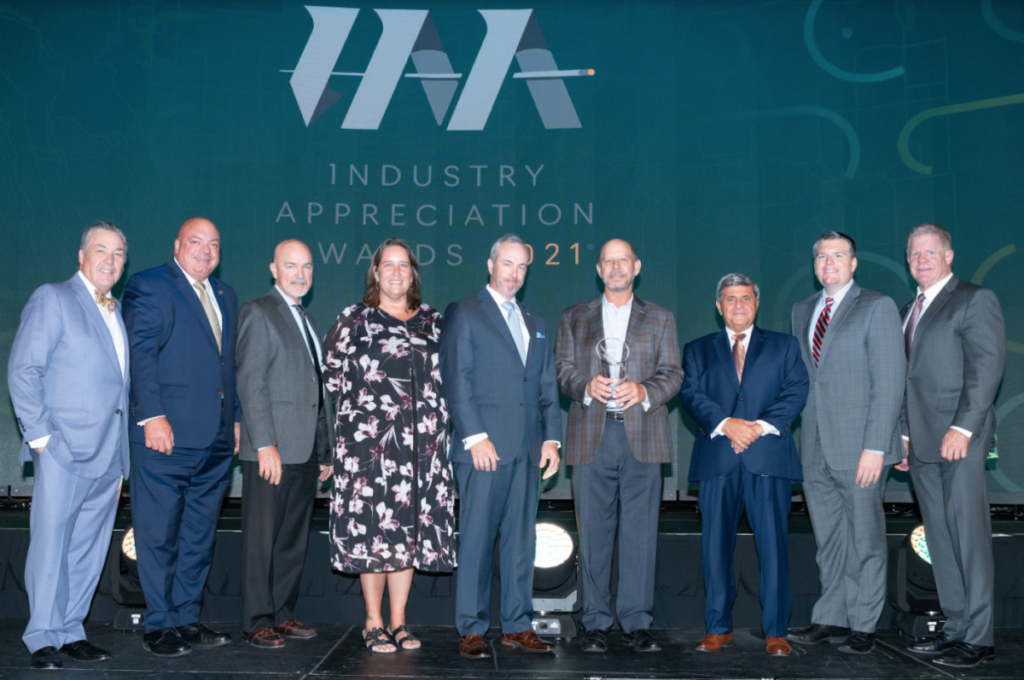
Industry Appreciation Awards celebrate the Lee County business community Fort Myers, FL, Oct. 25, 2021 – In front of a sold-out crowd of 600 Lee County business leaders, Cushman & Wakefield | Commercial Property Southwest Florida (CPSWFL) was honored as the Community Steward of the Year at the 29th Industry Appreciation Awards. The awards are presented by the Horizon Council, Horizon Foundation and the Lee County Economic Development Office. The Industry Appreciation Awards ceremony was held Friday, Oct. 22 at the Caloosa Sound Convention Center in Fort Myers, The Community Steward of the Year Award is presented to a company whose financial, volunteer, and active involvement in community organizations and programs create a better quality of business and civic life in Lee County. CPSWFL was selected for its focus on strengthening the community by improving the quality of life and business environment in our region. The CPSWFL team proudly supports and serves many nonprofit organizations in Southwest Florida, including Junior Achievement, Champions 4 Children, Residential Options of Florida and PACE Center for Girls – Lee. The 2021 Industry Appreciation Award winners also included: Business Resiliency and Innovation Award: Fort Myers Brewing Company and Sanibel Captiva Community Bank Innovator of the Year: Cigent Technology and Energy Harness Corporation Manufacturer of the Year: Storm Smart Startup of the Year: Two39 Work Small Business of the Year: Stickboy Creative Large Business of the Year: Stevens Construction, Inc. A special Lifetime Achievement Award was presented to Gary Griffin, President of B&I Contractors, Inc. The Lee County Economic Development Office provides business assistance to retain existing businesses, attract new businesses and encourage entrepreneurship to ensure Lee County has a strong economy, thriving communities and broadly shared prosperity. The Horizon Council is a public-private advisory board established in 1991 to advise the Lee Board of County Commissioners on economic development issues. The council’s mission is to improve Lee County’s business environment, retain and encourage expansion of existing businesses, and attract new and diversified employers. It is the only public-private partnership of Lee County Government and business leaders. The Horizon Foundation Inc. is a 501(c)(3) organization established as a fundraising vehicle enabling people and businesses to actively support the program of work of the Horizon Council and the Lee County Economic Development Office.

Cushman & Wakefield | Commercial Property Southwest Florida honored as 2021 Community Steward of the Year Read More »

Southwest Florida’s Shift from “Seasonal” Tourism

By Gary Tasman If “season” in Southwest Florida felt a little different to you this year, it’s probably no surprise. We’ve all grown accustomed to seasonal population fluctuations, but the variance between our busy winters and lazy summers is decreasing rapidly—and this new year-round tourism trend will have a significant impact on our local economy and business climate. Just 15 years ago, it was not uncommon for restaurants to close for several weeks during the summer, especially in tourist havens like Fort Myers Beach, Sanibel, or Marco Island. Many small businesses took advantage of a major dip in tourism from mid-May through mid-October. Today, taking two months off during the “slow months” seems nearly unthinkable for a local business. A glance at passenger traffic through Southwest Florida International Airport explains this phenomenon. In 1984, the first full year RSW was open, the airport saw 194,287 passengers in March, its busiest month. By contrast, August 1984 only saw 75,638 passengers travel through RSW, 61.1% fewer passengers. In 2021, seasonal fluctuations still exist, but not at the extreme level we’ve seen in past years. 1,162,342 passengers traveled through RSW this March, an astounding number considering the impact of the coronavirus pandemic. In August of this year, 647,534 travelers passed through the airport, a drop of just 44.3% from the airport’s busiest month. Why the shift? Certainly, the pandemic had some impact on travelers. Pent-up demand after months of coronavirus isolation had consumers itching for travel, and Florida’s open business climate and scarcity of coronavirus restrictions made the state an ideal tourist destination in 2021. Tourists could travel to Florida without fear of beaches, parks, golf courses, and restaurants being closed due to coronavirus controls. While the pandemic may have accelerated this trend, we expect it to continue. Since those early days of travel through RSW, our economy has diversified. Today, people visit Southwest Florida in the summer and discover that even with our sweltering afternoons and evening thunderstorms, this region has much to offer: a nurturing environment for business and employment, outstanding schools, and top-of-the-line healthcare. We’ve all seen the impact of this realization in the number of homes being sold and built in Southwest Florida, and seasonal homes are a large part of that equation. Nationwide, the U.S. saw a huge jump in the number of vacation homes sold in early 2021, and as of 2019, Lee and Collier are the country’s #1 and #3 counties for vacation homes. And as more people realize that they can be effective while working remotely, our population boom—both seasonal and permanent—will continue. With population growth comes opportunity, a concept we’ve discussed here before. Homes need to be built, fueling the construction industry. New residents need services like physicians, auto repair shops, air conditioning technicians, and landscapers. They also need grocery stores, restaurants, entertainment, and recreation centers. The need for these businesses and services drives even more growth, and the cycle continues with commercial real estate in high demand to fulfill the needs of our growing population. As long as Southwest Florida can continue offering everything that makes it special— year- round recreation, outstanding healthcare and educational opportunities, and growing employment opportunities–– we anticipate the exponential growth of our region to continue its upward trajectory. To learn how you can take advantage of the demand created by our current market, contact the commercial property experts at Cushman & Wakefield | Commercial Property Southwest Florida. Whether it’s time for you to sell, or you’re just considering your options in our current commercial real estate market, the commercial property experts at Cushman & Wakefield | Commercial Property Southwest Florida have the knowledge, data, and resources to determine the best strategy for you. Contact us by calling 239-489-3600 or contact-us.

Southwest Florida’s Shift from “Seasonal” Tourism Read More »

Cushman & Wakefield | Commercial Property Southwest Florida announces promotion of Michael Cassin

13-year employee promoted to property manager position FORT MYERS, Fla. (September 30, 2021) – Cushman & Wakefield | Commercial Property Southwest Florida is pleased to announce the promotion of Michael Cassin to the position of Property Manager. In his new role, Cassin’s responsibilities will include property inspections and reporting, vendor management, budgeting assistance and CAM reconciliation assistance. Cassin is a 13-year employee at CPSWFL and started with the company as a part time filing clerk while still in high school. Over the years, he has grown with CPSWFL, most recently holding the positions of accounting assistant and property management coordinator. “It’s incredibly fulfilling to see an employee like Michael develop within your organization,” said CPSWFL CEO and Principal Broker Gary Tasman. “We’re all very proud of his accomplishments and are excited to see his continued growth in his new position as property manager.” During his tenure at CPSWFL, Cassin has developed expertise and knowledge in building management operations, lease administration, and accounting processes. CPSWFL is Southwest Florida’s largest third-party commercial property management company and is committed to continued growth of its property management and facilities management offerings. For more information about property management and facilities management services at CPSWFL, call 239-489-3600 or visit https://cpswfl.com.

Cushman & Wakefield | Commercial Property Southwest Florida announces promotion of Michael Cassin Read More »

Cushman & Wakefield | Commercial Property Southwest Florida brokers $902,500 sale of Fort Myers office space

Aqua 4, LLP has purchased a 5,204 square foot office building located at 28 Barkley Circle Fort Myers, Florida for $902,500 from Summerlin Risk Management, LLP. Gary Tasman, CEO and Principal Broker, and Gretchen Smith, Director and Broker of Cushman and Wakefield | Commercial Property Southwest Florida, LLC represented the seller in negotiating the transaction.

Cushman & Wakefield | Commercial Property Southwest Florida brokers $902,500 sale of Fort Myers office space Read More »

Scroll to Top