Cushman & Wakefield | Commercial Property Southwest Florida welcomes back property manager Gayle Erickson-Ash

Cushman & Wakefield | Commercial Property Southwest Florida welcomes back property manager Gayle Erickson-Ash

FORT MYERS, Fla. – One of Southwest Florida’s largest commercial property management companies is strengthening its commitment to its commercial leasing clients. Cushman & Wakefield | Commercial Property Southwest Florida (CPSWFL) is welcoming back Gayle Erickson-Ash to the position of Property Manager. Erickson-Ash had worked with CPSWFL previously in 2019-2020. Erickson-Ash has more than 25 years experience in various roles in the real estate industry. She holds expertise in financial asset reporting, budgeting, CAM reconciliation, association management, construction management, and client relations. “Gayle has a great deal of experience and knowledge in commercial leasing and property management,” said CPSWFL CEO and Principal Broker Gary Tasman. “It’s great to have her back at our company, and our clients will definitely benefit from her return. She works with a very client-centered philosophy.” Erickson-Ash has worked with well-established local and national real estate owners and REITs. Properties she has managed vary from resorts, high-rise offices, retail centers, industrial parks, medical buildings, and residential townhomes. She holds a Florida Real Estate Sales Associate License, Florida CAM license, Real Property Administrator Certification from BOMI International, and holds the LEED Green Associate credential from the U.S. Green Building Council. “I’m happy to be back at Cushman & Wakefield | Commercial Property Southwest Florida, in part because of the corporate culture,” said Erickson-Ash. “It’s great to work for a company that is engaged with the community and is as dedicated to giving back as it is to its business.” CPSWFL was recently recognized for its community involvement at the 2021 Industry Appreciation Awards, where the company received the Community Stewardship Award. The Industry Appreciation Awards are presented by the Lee County Economic Development Office, Horizon Council, and Horizon Foundation. CPSWFL is Southwest Florida’s largest third-party commercial property management company and is committed to continued growth of its property management and facilities management offerings. Erickson-Ash joins a team that manages nearly eight million square feet of commercial space in Collier, Charlotte, Lee and Hendry Counties. For more information about CPSWFL brokerage services, email Erickson-Ash at gericksonash@cpswfl.com or visit www.cpswfl.com.

Cushman & Wakefield | Commercial Property Southwest Florida welcomes back property manager Gayle Erickson-Ash Read More »

7 Commercial Lease Clauses You Need to Know

By Gary Tasman Although it seems the worst of the COVID-19 pandemic may finally be behind us, its effects continue to change the way we do business. It also continues to create some challenging situations for both commercial property owners and their tenants. Earlier this year, we discussed how force majeure lease clauses are being interpreted in the context of the pandemic. Force majeure is just one of many clauses that are essential for property owners to protect their investments. There are a number of other clauses that are—or at least should be—included in any commercial property lease, and many of them are even more relevant in our “new normal.” Important Commercial Lease Clauses Governing Law Laws can vary quite significantly from state to state, and that includes the laws that interpret leases. Novice commercial property owners may not be aware that a contract can designate which state or jurisdiction’s laws will apply to it. In other words, just because a contract was signed in Florida, it may not be governed by the laws of the State of Florida. As investors from across the country snap up property in our region, they may choose their home state’s statutes, or even U.S. Federal law, to govern potential contract disputes. Property owners need to understand their governing law options and how they vary to ensure they are making the most beneficial choice for their leases. Improvements and Alterations With demand for commercial property at an all-time high in 2021, it’s becoming more difficult for tenants to find a space that meets all of their needs. Many properties will need alterations to make them suitable for the tenants who wish to lease them. A clearly outlined improvements and alterations clause will denote what changes you are willing to make to the space before your tenants move in, who is responsible for the cost of those improvements or alterations, and the terms of payment if applicable. This clause should also outline a tenant’s rights to make changes to their space in the future, and the process for gaining approval to do so. Many businesses have seen changes in their need for space and how they use it because of the pandemic, and tenants will likely appreciate the opportunity to alter their space to fit their needs. However, as an owner in our current market, you have a distinct negotiation advantage. While your prospective tenants may want a number of alterations made to a space, they also understand that you likely have other potential renters who may not have as many needs. Subleasing Subleasing is another clause that is particularly vital in our current environment. As some workplaces downsize their teams or shift staff members to remote employment, they may find that they have more square feet than they need. To remain financially viable while keeping their current location, some tenants may want to sublease a portion of their space to another tenant. The sublease clause outlines not only whether or not this is allowed, but can outline any specific restrictions and create a process for seeking approval to sublet. Rent Escalation Consumer prices have increased more than 6% in the last year, the biggest jump in inflation in three decades. As a lessor, that means it now costs you more to maintain your property. If you don’t have a rent escalation clause in your lease, you are solely responsible for covering those unexpected expenses. Rent escalation clauses outline exactly how and when rent will increase for your tenants. This could be an annual increase of a fixed amount, for example a 2% escalation each year of the lease. However, this clause can also tie rent increases to inflationary indices like the consumer price index. This provides you with an insurance policy of sorts in volatile economic conditions. Merger With competition high for commercial space, many prospective renters are willing to negotiate to acquire the space they want. They may promise or agree to terms that would not typically be included in a boilerplate lease. No matter how formal these arrangements are, the merger clause will override any agreements that are not included in the actual lease document. This clause protects everyone by ensuring that all enforceable agreements between parties are included in one singular document. For novice property owners, it is particularly important to remember to include every agreement with a tenant inside the body of the lease. Tenant Self-Help As a landlord, you hold certain obligations for the maintenance and repair of your property, and  your tenants expect you to perform these duties. When property owners don’t take corrective actions, the tenant self-help clause outlines when renters can take matters into their own hands. Property owners would clearly prefer to have control over the costs of these repairs, but in an emergency, it may be more efficient for tenants to take action. In these cases, the tenant self-help clause will outline which expenses are reimbursable, when repayment should occur, and the situations in which self-help is allowed. Dispute Resolution In the event that you and your tenants have a disagreement about any of the terms of the lease, the dispute resolution clause outlines how to resolve those issues. Often, leases will outline a multi-step approach, beginning with mediation, then progressing to arbitration before resorting to litigation. This type of approach can potentially reduce the cost and time involved with a lawsuit. A related clause, Attorney’s Fees, assigns responsibility for litigation costs.  Typically, this clause will state that the winning party may recover attorney’s fees from the losing party. It can also denote responsibility for other costs like court fees, and even the expenses associated with arbitration or mediation. In many cases, the clauses above are considered “boilerplate” by both inexperienced property owners and renters. However, each of these clauses should be carefully considered and scrutinized when writing and reviewing commercial lease agreements. If commercial leasing or tenant issues are a concern for you, reach out to the professionals at Cushman & Wakefield

7 Commercial Lease Clauses You Need to Know Read More »

NBC News: The benefits – and drawbacks – of using social media for business

Gary Tasman, CEO and principal broker at Cushman & Wakefield | Commercial Property Southwest Florida was quoted in this article about the advantages and disadvantages of businesses using social media to promote themselves. Gary discusses the importance of social media and what happens if i’ts suddenly unavailable. Read the full article here: The benefits – and drawbacks – of using social media for business

NBC News: The benefits – and drawbacks – of using social media for business Read More »

Cushman & Wakefield | Commercial Property Southwest Florida brokers $2.51 million sale of Fort Myers bank building

CFL Fort Myers, LLC has purchased a 3,328 square foot freestanding former Chase Bank branch located at 7010 Cypress Terrace Fort Myers, Florida for $2,510,000 from JPMorgan Chase Bank National Association. Gary Tasman, CEO and Principal Broker, and Shawn Stoneburner, Senior Director and Broker of Cushman and Wakefield | Commercial Property Southwest Florida, LLC handled the seller in the transaction.

Cushman & Wakefield | Commercial Property Southwest Florida brokers $2.51 million sale of Fort Myers bank building Read More »

When Convenience is the Cure: Medical Retail

By Gary Tasman Nationwide, commercial property is experiencing a significant shift in the makeup of the brick- and-mortar retail market. The COVID-19 pandemic has repeatedly taught us that convenience is king, and although we have somewhat returned to our pre-pandemic routines, online ordering, delivery services, and omni-channel distribution are all continuing to thrive. While some traditional retail shops are downsizing their space or even shifting to digital storefronts to better serve their customers, an interesting class of new retail tenants, called “medtail,” is drawing new customers to shopping centers. While the increased foot traffic is a boon to commercial property owners seeking to fill retail space, this growing class of retail also brings unique challenges to lessors. The Rise of Medical Retail “Medtail,” short for “medical retail,” is a rapidly growing addition to the retail tenant mix. Dermatologists, physical therapists, medical spas, and even imaging services and urgent care centers are now occupying retail space once held by more traditional retailers. Growing consumer expectations for convenience are one source of medtail’s increasing popularity, alongside an aging population with more significant medical needs than previous generations. While much of the nation is just beginning to experience this trend, Southwest Florida has long been a medtail mecca. Thanks to a population 13 years older than the national average, our region is no stranger to these medical-retail hybrids. For landlords, medtail tenants bring foot traffic to shopping centers and variety to a tenant mix. However, healthcare-oriented tenants have specialized needs, and property owners must be prepared to meet the expectations of their medical lessees. Medtail Tenant Needs In many cases, improving a space for a medical retail tenant may be cost-prohibitive. Landlords must consider the following needs when considering leasing to a medtail tenant. Barrie Scardina, Cushman & Wakefield’s Retail Services Leader for the Americas, outlines several factors: Waste Disposal The disposal of medical waste requires special pickup services, and these waste products must be kept separate from general waste. Medtail leases must address responsibility for medical waste pickup as well as any insurance issues that may result from potential contamination issues. Structural and Weight Constraints Imaging and advanced diagnostic equipment may require different floor load factors to accommodate the weight of these items. Additionally, imaging equipment may require reinforced walls, and labs may require specialized ventilation. Electrical and Plumbing Needs Surgery centers and facilities that conduct similar procedures require a backup generator and may also utilize an additional electrical feed. Facilities used for heavy medical purposes need a sink in each examination room, and typically have separate staff and patient restrooms. Life Safety Systems It is not uncommon for medical facilities to require more robust fire and life safety systems than standard retailers. Co-tenancy Clauses Medtail brands want to ensure that they project a healthful image. They will typically avoid being located near tenants like tobacco shops or liquor stores, and may seek a co-tenancy clause to ensure their health-conscious image is protected. Because of the above factors, tenant improvements can be very pricey for medical retail uses. “Depending on the healthcare entity signing the lease, they could have very high tenant improvement allowance demands,” explains Scardina. “$50 to $75 per square foot is standard in a medical office building, but their total cost could run between $200 and $300 psf for standard healthcare uses.” While the medtail trend may not be new to Southwest Florida, we anticipate that this sector will continue to grow as our desire for convenience in all areas of our lives matures. Whether you are a healthcare provider seeking retail space or a property owner in search of a dependable tenant, the Commercial Property Experts at Cushman & Wakefield | Commercial Property Southwest Florida are prepared to assist you. Contact us by contact-us

When Convenience is the Cure: Medical Retail Read More »

Cushman & Wakefield | Commercial Property Southwest Florida honored as 2021 Community Steward of the Year

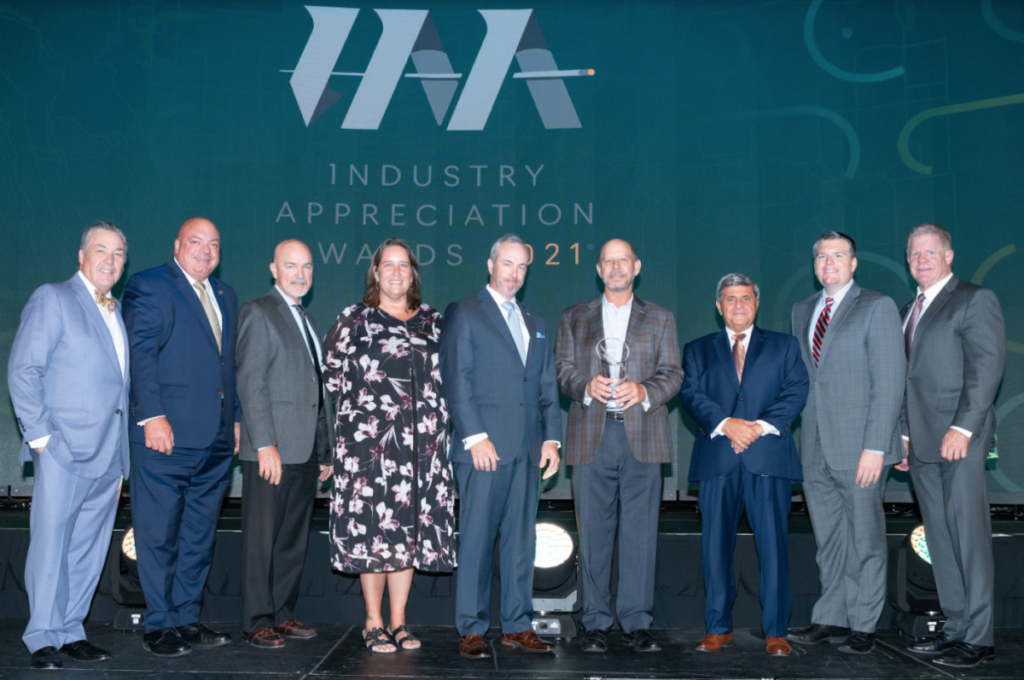
Industry Appreciation Awards celebrate the Lee County business community Fort Myers, FL, Oct. 25, 2021 – In front of a sold-out crowd of 600 Lee County business leaders, Cushman & Wakefield | Commercial Property Southwest Florida (CPSWFL) was honored as the Community Steward of the Year at the 29th Industry Appreciation Awards. The awards are presented by the Horizon Council, Horizon Foundation and the Lee County Economic Development Office. The Industry Appreciation Awards ceremony was held Friday, Oct. 22 at the Caloosa Sound Convention Center in Fort Myers, The Community Steward of the Year Award is presented to a company whose financial, volunteer, and active involvement in community organizations and programs create a better quality of business and civic life in Lee County. CPSWFL was selected for its focus on strengthening the community by improving the quality of life and business environment in our region. The CPSWFL team proudly supports and serves many nonprofit organizations in Southwest Florida, including Junior Achievement, Champions 4 Children, Residential Options of Florida and PACE Center for Girls – Lee. The 2021 Industry Appreciation Award winners also included: Business Resiliency and Innovation Award: Fort Myers Brewing Company and Sanibel Captiva Community Bank Innovator of the Year: Cigent Technology and Energy Harness Corporation Manufacturer of the Year: Storm Smart Startup of the Year: Two39 Work Small Business of the Year: Stickboy Creative Large Business of the Year: Stevens Construction, Inc. A special Lifetime Achievement Award was presented to Gary Griffin, President of B&I Contractors, Inc. The Lee County Economic Development Office provides business assistance to retain existing businesses, attract new businesses and encourage entrepreneurship to ensure Lee County has a strong economy, thriving communities and broadly shared prosperity. The Horizon Council is a public-private advisory board established in 1991 to advise the Lee Board of County Commissioners on economic development issues. The council’s mission is to improve Lee County’s business environment, retain and encourage expansion of existing businesses, and attract new and diversified employers. It is the only public-private partnership of Lee County Government and business leaders. The Horizon Foundation Inc. is a 501(c)(3) organization established as a fundraising vehicle enabling people and businesses to actively support the program of work of the Horizon Council and the Lee County Economic Development Office.

Cushman & Wakefield | Commercial Property Southwest Florida honored as 2021 Community Steward of the Year Read More »

Scroll to Top