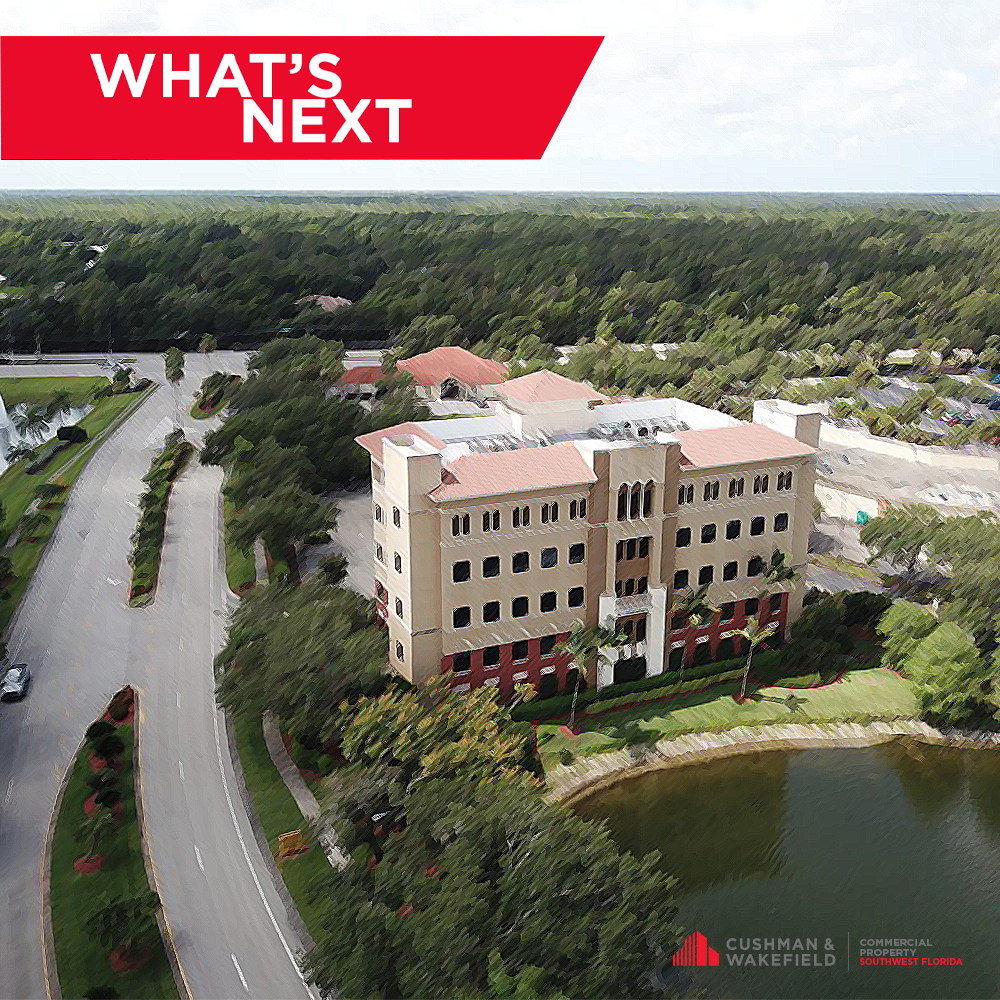
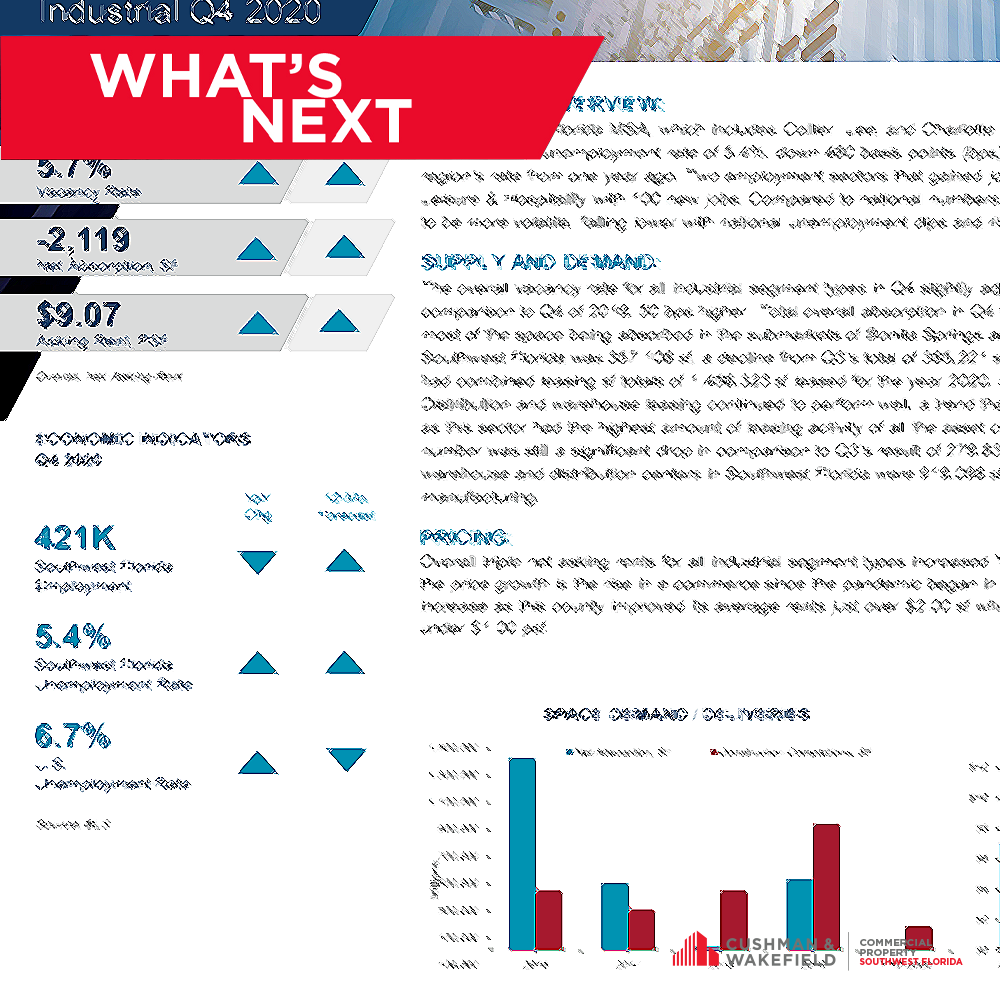
What’s Next, Ep. 15: Q4 Office Marketbeats

Five questions to ask yourself before investing in commercial property

By Gary Tasman With Southwest Florida’s population booming and interest rates at near historic lows, our region is once again ripe for commercial development, and investors are taking notice. But for first-time buyers looking to capitalize on the commercial property market in Southwest Florida, the process of scouting properties can be intimidating. Before you take the leap into commercial property investing, there are five questions you should ask yourself. What’s my goal? One of the first questions your broker will ask you is your investment strategy: Are you interested in growth or income?Investors who pursue a growth strategy are hoping to buy a property in a prime location in the hopes that they will be able to re-sell the property for a profit after the property appreciates. Often, however, these properties come with high price tags and low operating income potential, which creates a significant barrier to entry for first-time investors.The second property investment strategy focuses on income production and cash flow, also called high yield properties. In this scenario, investors seek properties with low operating costs in relation to the rental income they generate. While the monthly and annual returns on these properties can be favorable, these properties also tend to increase in value slowly, meaning an eventual sale may not generate a significant profit. What’s my risk tolerance? Just like any type of investing, some property investments have relatively low risk, and some are high risk ventures. A commercial building that already has tenants locked in for several years can be fairly low risk, because the income is somewhat guaranteed. On the other hand, a completely vacant building might appeal to you because it’s a clean slate. Unfortunately, you’ll take the risk that lessees may be challenging to find.Another indicator of the level of risk you’re taking on is the property’s capitalization rate, or “cap rate.” This ratio essentially represents your annual return on investment and is calculated using your investment’s net income divided by the property’s purchase price. The higher the cap rate, the higher the reward, but high cap rates also come with increased risk.Even with a comparatively high-risk investment, a strong commercial property broker can help you mitigate some of that gamble. By conducting a thorough market analysis, your broker can determine the best possible use for your property, ideal rental rates, and how to position your investment properly to get the best price possible on your timeline. How long of a commitment am I ready for? If you’re thinking short term and want to start earning on your investment today, your broker will likely guide you towards infill properties. Infill properties are those already in high density areas, with established infrastructure and demand generators nearby. You’ll be located in a neighborhood that customers are already visiting for their business needs, but you’ll likely pay a high price and still need to deal with the aggravation of maintenance or upkeep of an older building.If you’re in it for the “long haul,” however, your broker may guide you towards “path to growth” areas. These properties are located in an up-and-coming region that is not yet developed, or which has experienced minimal development but shows outstanding potential. A strong broker will use his or her knowledge of the local market, growth patterns, neighborhood demographics, infrastructure updates, and recent transactions to identify the ideal properties to take advantage of future development. In the short term, you may not see much income from your path-to-growth property, but with guidance from the right broker, you’ll be well-positioned for the long haul. Who are the current tenants? Unless you’re purchasing raw land, your commercial property investment will likely have current occupants in place. These could be the current owners, or more likely tenants who are renting one or more units in the property. Believe it or not, the quality of your tenants can often dictate the quality of your investment, and learning about the property’s tenants is an essential part of your due diligence.Obviously, the more creditworthy your tenants and their businesses are, the better position you’ll be in financially. You’ll want to review the lease terms for each of the current tenants to project future income from the property, and to develop a plan for upcoming vacancies. Your professional commercial property broker can complete a thorough analysis of your existing tenants, and guide you on decisions like rent adjustments, lease terms, improvements and modifications, as well as the types of tenants you’ll want to pursue in the future. How hands-on do I want to be? If you have tenants in your property, you’ll need to find a way to manage the day-to-day operations. Accounting, marketing, repairs, daily maintenance and managing your tenants can be a full-time job, depending on the size and condition of your property and the number of tenants you’ll have. If you’re not an experienced property manager, the responsibility can be overwhelming. If you live far from your investment, have other full-time obligations, or simply want to be hands-off, it’s a smart decision to hire a property manager. Fortunately, many full-service brokerages like Cushman & Wakefield | Commercial Property Southwest Florida offer property management services to take care of the daily responsibilities of ownership. Once you’ve truthfully answered the five questions above, you’re ready to take the next step on your property investment journey: Consulting with an experienced commercial property broker. The experts at Cushman & Wakefield | Commercial Property Southwest Florida have access to best-in-class data and analytics to help you make the right decisions to meet your property investment goals. Contact us at 239-489-3600 or contact-us.

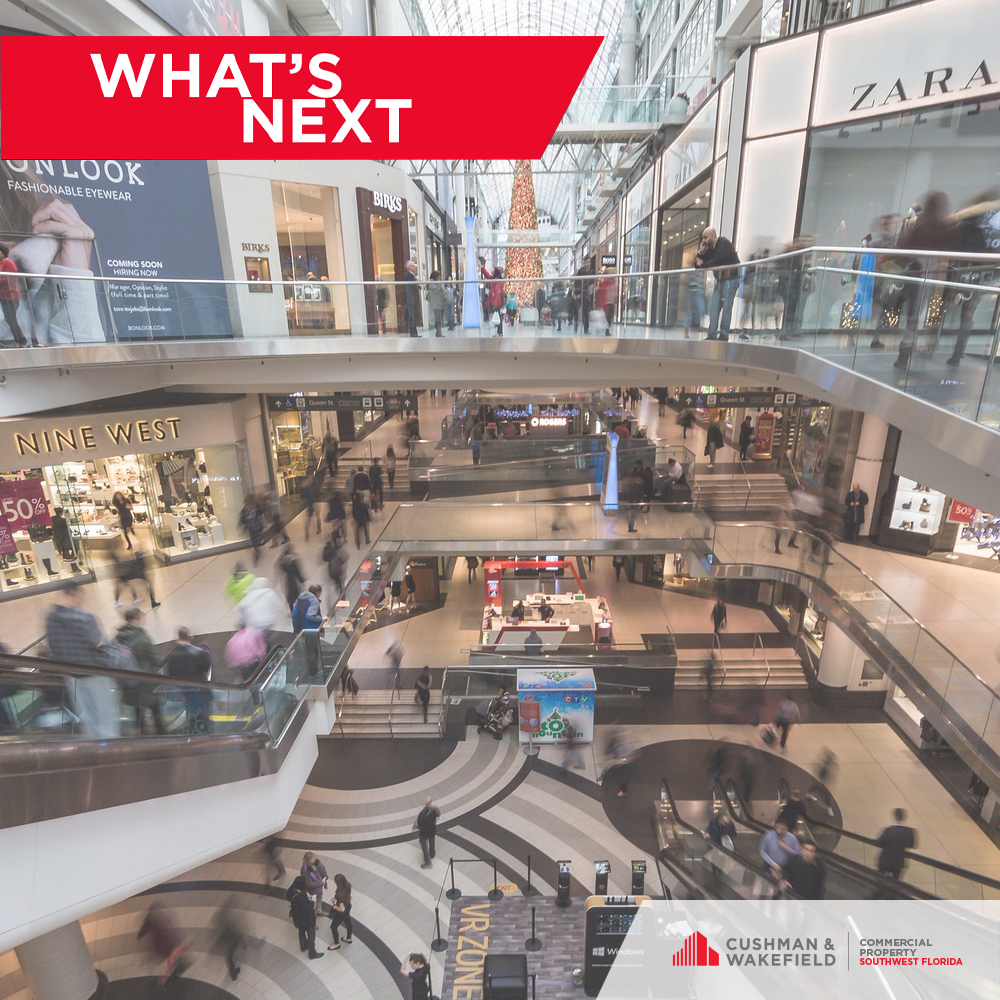
Five questions to ask yourself before investing in commercial property Read More »

How Has COVID-19 Accelerated Dining Trends?

By Gary Tasman If nothing else, 2020 taught us that we can all adapt to changing conditions and learn how to navigate through radical shifts in how we function day to day. This is true not only for individuals and families but also for businesses. Millions of business owners and managers were forced to radically reinvent their business models to remain solvent during the COVID-19 crisis. This is especially true of the restaurant industry, which is accelerating trends at warp speed. Stay-at-home regulations, social distancing, and public apprehension have forced restaurants to shift their models significantly to focus on delivery and carry-out in order to stay profitable. Fortunately for many establishments, this “quick service restaurant” trend had already emerged pre-pandemic. Restaurants that had already embraced this shift were better positioned to weather the storm produced by COVID-19.  For decades, the food delivery space was dominated by pizza, but in recent years delivery apps rapidly grew in popularity, making it possible to have meals delivered from a variety of restaurants. Locally-based Grub Cab, now part of Bite Squad, began delivering from restaurants in Fort Myers more than a decade ago, and has since been joined by national competitors like Grubhub, DoorDash, and Uber Eats. Cushman and Wakefield corporate research indicates that digital ordering and delivery have been growing 300 percent faster than dine-in traffic since 2014—and that trend is unlikely to slow in our “new normal.” This paradigm shift shouldn’t be surprising, as we’ve seen a similar trend developing in retail for years. Omnichannel ordering and engagement—activities such as ordering online for in-store pickup—has redefined big box retail and even automobile sales models. It only stands to reason that this template would eventually carry over to the dining industry. “Today’s world is all about convenience,” explained Matt Ashman, Cushman & Wakefield’s head of London leisure and restaurants. “Increasingly more customers, especially Millennials who represent a growing proportion of the consumer population, want to consume their favorite foods whenever and wherever they want.” A shift to omnichannel dining doesn’t occur overnight, and restaurants that weren’t prepared to shift their business model likely learned some tough lessons during the early months of the pandemic. In many cases, restaurants have needed to remodel to be able to simultaneously offer delivery, pickup, and dine-in options. Delivery drivers need designated spaces, carry-out customers need a dedicated pickup area, and in-person diners wish to dine uninterrupted by the change in workflow. In some cases, specialized equipment, technology, physical remodeling and plumbing or electrical infrastructure updates are needed to ensure customer satisfaction no matter how they order and consume their meals. The shift to our “new normal” has clearly left its mark on the dining industry. A survey released by the National Restaurant Association in December indicated that 110,000 restaurants had closed permanently or long-term as a result of the COVID-19 pandemic, representing roughly one in six dining establishments in the United States. Of the full-service restaurants that had remained open, revenue had fallen 36% on average. Like every other industry, the dining industry is headed for a reset as we journey towards recovery from the COVID-19 recession. Regardless of the pandemic, omni-channel dining is here to stay. Those restaurants that were able to shift their business models quickly will likely reap the benefits of pent-up demand once the pandemic has finally passed. Restaurants that don’t outlast the pandemic will ultimately lead to more restaurant space available for a new generation of omni-channel dining establishments.  Are you prepared to evolve your business and take advantage of the paradigm shift presented by COVID-19? The Go-To Team of commercial property brokers at Cushman & Wakefield | Commercial Property Southwest Florida is an excellent resource as you consider your options. Cushman & Wakefield’s Southwest Florida property brokers have extensive local market knowledge and best-in-class data and analytics to guide your decision-making. Contact us for a complimentary, no-obligation consultation by calling 239-489-3600 or contact-us.

How Has COVID-19 Accelerated Dining Trends? Read More »

Gary Tasman talks Restaurant Biz in News-Press

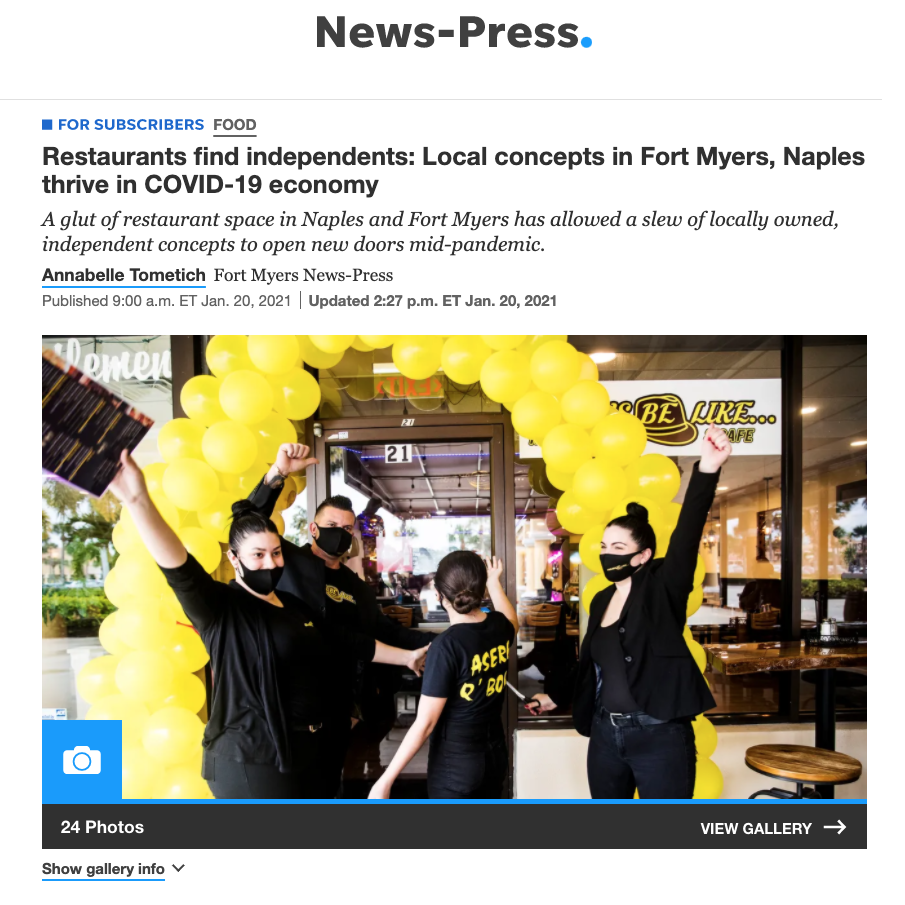
When the News-Press wanted to learn more about how the restaurant business is changing in Southwest Florida, the Fort Myers newspaper turned to Gary Tasman, CEO and Principal Broker at Cushman & Wakefield | Commercial Property Southwest Florida.  Read more from in the Jan. 20th article (subscriber-only content). The landscape of  Fort Myers is changing. Are you ready for it? Cushman & Wakefield | Commercial Property Southwest Florida wants to help you take advantage of this opportunity. contact-us.

Gary Tasman talks Restaurant Biz in News-Press Read More »

Southwest Florida’s Lodging Outlook: Don’t Lose Hope

By Gary Tasman Season has arrived in Southwest Florida, but like so many other traditions, it doesn’t look quite the same as it did one year ago. While our roads are busier than they were a few months back, our annual winter influx of visitors and residents hasn’t quite reached the levels we saw in 2019 or even early 2020. Tourism, hospitality and lodging have long been the primary drivers of our region’s economy. The last year has definitely been the most challenging for these intertwined industries. Lodging, in particular, has struggled across the world. And while Southwest Florida has seen its share of difficulties in the hotel industry, our region is actually one of the brighter spots in the nation. When the COVID-19 pandemic essentially shut down the U.S. economy in March, travel plans were first on the chopping block. An April 2020 survey by ValuePenguin and LendingTree showed that nearly half of all Americans canceled our summer travel plans because of coronavirus concerns. The impact on the lodging industry was immediate. Cushman & Wakefield data reveals that nationally, hotel occupancy was at a mere 33.5% in the second quarter of 2020, compared to 70% occupancy over the same period in 2019. Road trips were the preferred travel option for most Americans, who likely sought socially- distanced vacations at destinations close to home. Hotels located near highways and recreational destinations had stronger performances than urban lodging and conference destinations. Southwest Florida benefited from the road trip trend in 2020. Situated within a few hours of three of the nation’s largest metro areas, and with an abundance of socially-distanced outdoor activities available, visitors from across the state turned to our area in search of open beaches and a change of scenery. According to the Tourist Development Council, in-state visitors to Collier County in October 2020 increased 60% over October 2019. Lee County has seen a similar trend. A recent News-Press article, citing data from Arrivalist, noted that 70% of Lee County’s visitors since the pandemic began have come from other parts of Florida. Nationally, hotel construction and sales have slowed, and while many lodging establishments are still being built, most have pushed back their opening dates until travel is more active. This was not the case for Fort Myers’ long-awaited Luminary Hotel & Co., which opened in September. Our area shows little intent to slow down, with five more new Lee County hotels in the works for 2021, averaging more than 110 rooms each. Local developers appear to be banking on a rapid recovery of the tourism market. The exception is in Port Charlotte, where Allegiant Airlines halted construction of its massive waterfront resort, suspending construction in mid-2020 and ending a loan agreement to develop the destination. The resort was expected to lure travelers from the 40+ cities with nonstop flight access to Punta Gorda, but Allegiant recently stated that it has no plans to put more capital into the project until late 2021. A full recovery for our tourism and lodging industry will be slow, even while the COVID-19 vaccines are providing hope to lodging owners and travelers alike. Nationally, the lodging industry isn’t expected to see a full recovery until late 2023 at the earliest, but here in Southwest Florida, we’re already seeing signs of hope. Alaska Airlines, Allegiant Airlines, United Airlines, JetBlue Airways and Southwest Airlines have all either added routes to our region’s airports or have announced plans to do so in the very near future. While many northern states are still partially shut down because of the pandemic, Florida’s open economy may serve as a potential beacon for vacationers from these destinations, sparking a faster-than average recovery in the tourism and lodging industries. Property owners with land or buildings suited for lodging or hospitality should not lose hope in the face of the pandemic, nor should commercial property owners in any other asset class. Tourism in Southwest Florida is expected to recover much more quickly than the nation as a whole, thanks to in-state travelers who are sustaining Southwest Florida’s tourist economy. We sometimes bemoan Southwest Florida’s dependence on tourism for the health of our economy, and certainly we felt the sting in mid-2020. However, a quick projected rebound in lodging and hospitality will generate tourism dollars in our region and create demand for commercial property in all asset classes. To take advantage of this projected trend, contact the professionals at Cushman & Wakefield Commercial Property Southwest Florida. With extensive local market knowledge and best-in class data and analytics, Cushman & Wakefield is your go-to team for commercial property decision-making. Contact us by calling 239-829-5400 or contact-us.

Southwest Florida’s Lodging Outlook: Don’t Lose Hope Read More »

66.85-Acre Vacant Land Sold in North Fort Myers

North Fort Myers, Florida – Inge & Associates, Inc. has purchased the 66.85-acre vacant land located at 7700 & 7750 Bayshore Rd in North Fort Myers, Florida from Zuberbuhler Trust for $2,350,000. Gary Tasman, CEO and Principal Broker, and Lane Boy, Director and Broker, of Cushman and Wakefield | Commercial Property Southwest Florida, LLC represented the seller in negotiating the transaction. Cushman and Wakefield | Commercial Property Southwest Florida, LLC delivers integrated solutions by actively advising, implementing, and managing on behalf of landlords, tenants, and investors through every stage of the real estate process. They cultivate long term relationships, advising clients in buying, selling, financing, leasing, and managing assets. C&W also provides valuation advice, strategic planning and research, portfolio analysis, site selection and space location assistance. For more information about this transaction, or to learn more about Commercial Property Southwest Florida, please contact Gary Tasman at gtasman@cpswfl.com or visit www.cpswfl.com.

66.85-Acre Vacant Land Sold in North Fort Myers Read More »

Scroll to Top